.svg "Gorilla ROI")

Article Summary
🟤 Most sellers still think Amazon storage is a simple monthly warehouse fee.
🟤 A shipment can look fine on arrival, then become expensive weeks later for reasons that are easy to miss if you are only watching sales.
🟤 This guide breaks down the fee systems that matter and the inventory decisions that usually fix them.
Why Amazon Storage Fees Surprise Sellers
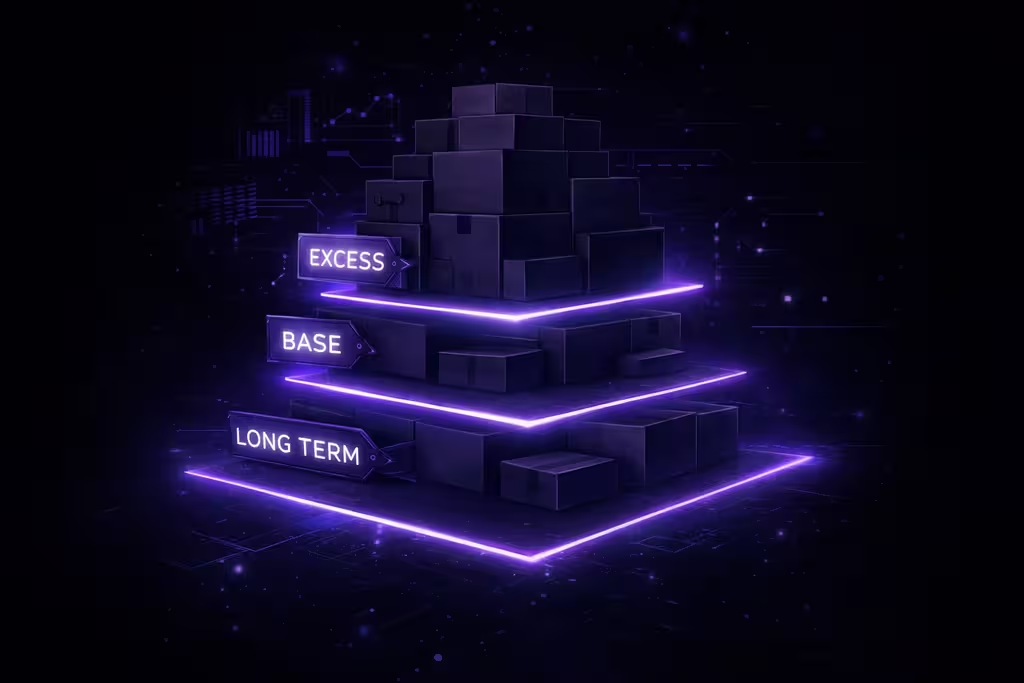
The problem is not the base storage rate.
The problem is that Amazon storage costs are layered.
A brand may send inventory into FBA expecting one monthly storage charge, then get hit by additional fees because the inventory stayed too long, covered too many weeks of demand, dipped too low in stock, or exceeded capacity.
That is why storage fees feel inconsistent. The bill is reacting to inventory behavior, not just inventory volume.
What Amazon is really measuring
Most storage problems start before the fee appears.
They start when inventory enters FBA too early, stays too long, or moves unevenly.
The 5 Storage Fees Every Seller Must Understand
Amazon storage is not one fee. It is five separate fee systems.
These charges are independent.
One SKU can be profitable on paper and still trigger multiple storage-related costs at the same time.
How Storage Fees Compound
Storage fees usually do not arrive as one obvious penalty.
They stack.
A common pattern looks like this:
This is why storage costs are easy to underestimate. The first month may look normal. The real cost appears later.
The financial damage is rarely one large mistake. It is a sequence of smaller decisions that leave too much stock in the most expensive layer of the network.
The Weeks of Cover Rule
If one number controls most storage outcomes, it is weeks of cover.
Weeks of cover tells you how long your current inventory will last at the current sales pace.
Weeks of Cover = Current Inventory Units ÷ Weekly Unit Sales
This is the number that exposes whether a shipment is reasonable or excessive.
Practical ranges
A brand does not need perfect forecasting to use this well.
It needs one discipline:
Check what the inbound shipment will do to weeks of cover before the shipment is sent.
That one step catches a large share of avoidable storage costs.
Simple decision rule
Weeks of cover is not a finance metric. It is a storage control metric.
The Most Common Storage Cost Mistakes
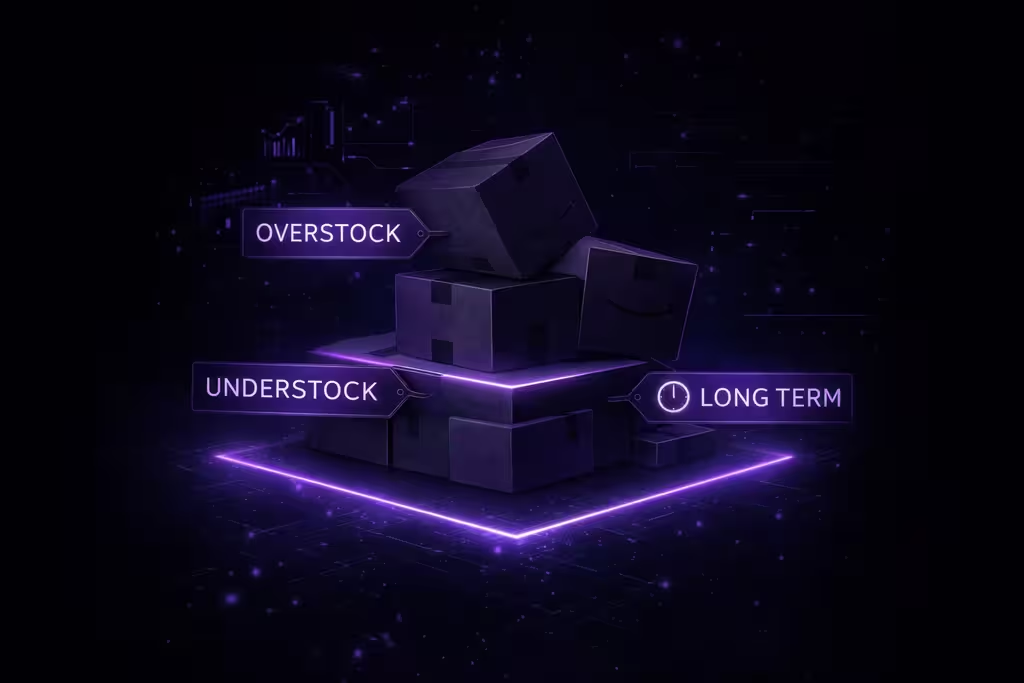
These are the mistakes that show up repeatedly.
Treating storage as a flat percentage of revenue
That hides the real problem SKUs.
Storage is driven by unit flow, cube, age, and replenishment timing. Two SKUs with the same revenue can create very different storage costs.
Watching unit count but not cubic volume
A product does not need huge unit count to become expensive. Large products consume space quickly. Small products can quietly age without standing out.
Reviewing fees after the settlement report
By the time the settlement report shows the cost, the inventory decision that caused it is already old.
Ignoring peak-season storage rates
A unit stored during peak season is not carrying the same cost as the same unit stored earlier in the year.
Sending too much inventory to “be safe”
That logic often creates the exact problem sellers were trying to avoid. The stock is safe from sellout, but margin gets eaten by storage.
Letting slow SKUs sit because they are still profitable on paper
Profitability models that ignore age, removals, and surcharge exposure overstate the value of keeping old inventory in FBA.
How Strong Inventory Teams Manage Storage
The teams that stay ahead of storage costs usually do a few basic things consistently.
Review the right reports regularly
The core reports are enough:
- inventory age
- storage fee report
- capacity dashboard
- removal history
The goal is simple: spot inventory that is becoming expensive before it becomes a billing problem.
Plan FBA as short-term storage, not bulk storage
FBA is the premium layer in the network.
It works best when it holds inventory expected to sell soon, not months of extra stock.
Separate where inventory lives
Use each storage layer for a specific job.
Estimate storage cost before sending inventory
A simple spreadsheet is enough.
Check:
- current weeks of cover
- post-shipment weeks of cover
- age risk
- peak-season exposure
- whether the SKU belongs in FBA at all
Set internal cutoffs
Teams that make the same storage decision every week waste time.
Set rules in advance.
Example:
Storage gets easier once the team stops improvising.
How to Use FBA, AWD, and 3PL Together

The cheapest network is not the one with the least inventory.
It is the one that puts inventory in the right place.
Basic inventory network
Supplier → AWD or 3PL → FBA → Customer
What each layer should do
AWD storage is roughly $0.48 to $0.57 per cubic foot, which is usually cheaper than holding bulk inventory inside FBA.
That changes the decision.
If a SKU needs reserve inventory, the question is not “Should we hold extra stock?”
The question is “Why is the extra stock sitting in FBA?”
Good network logic
- Keep only what should sell soon in FBA
- Keep reserve inventory in AWD
- Use 3PL for inventory that does not belong in FBA yet
A better network does more than reduce fees. It makes replenishment less chaotic.
Decision Framework
When inventory starts getting expensive, the choice usually comes down to three options:
- keep it in FBA
- remove it
- liquidate it
That decision becomes clearer when every option is viewed on a per-unit basis.
Step 1: estimate storage cost per unit
Per-Unit Storage Cost = Cubic Feet per Unit × Storage Rate
Step 2: compare alternatives
Use this table to decide
Practical cutoff logic
The mistake is waiting too long because the SKU still looks salvageable in theory.
Storage is one of the few cost categories that gets worse when a seller delays the decision.
10. Key Storage Fee Triggers (Summary Table)
Final Takeaway
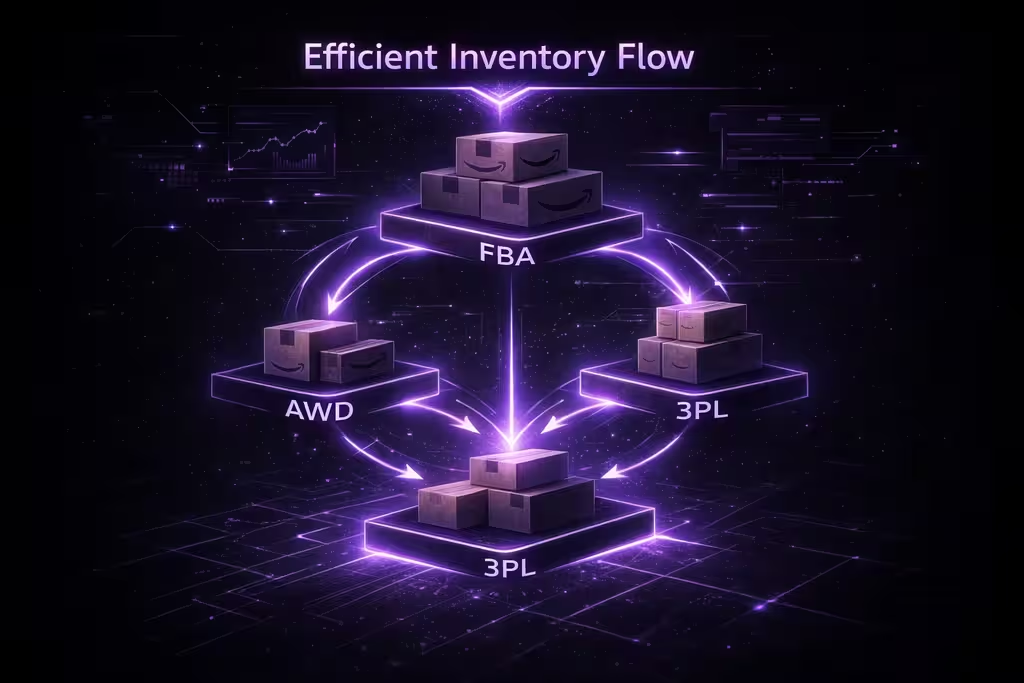
Amazon storage fees are easier to control once they are viewed as a flow problem, not a warehouse problem.
The real question is not how much inventory a brand has.
The real question is:
- how long that inventory will sit
- where it is sitting
- whether it belongs there
Brands that control storage costs usually do not rely on complicated systems. They follow a few simple rules:
- keep FBA tighter
- watch weeks of cover
- act before inventory ages into surcharge territory
- use AWD and 3PL as deliberate layers, not last-minute backups
Storage fees become unpredictable when inventory sits in the wrong place for too long.
They become manageable when inventory is routed intentionally.

















.webp)