.svg "Gorilla ROI")

Article Summary
Which One Do You Actually Need Right Now?
Jungle Scout vs Gorilla ROI? Which one?
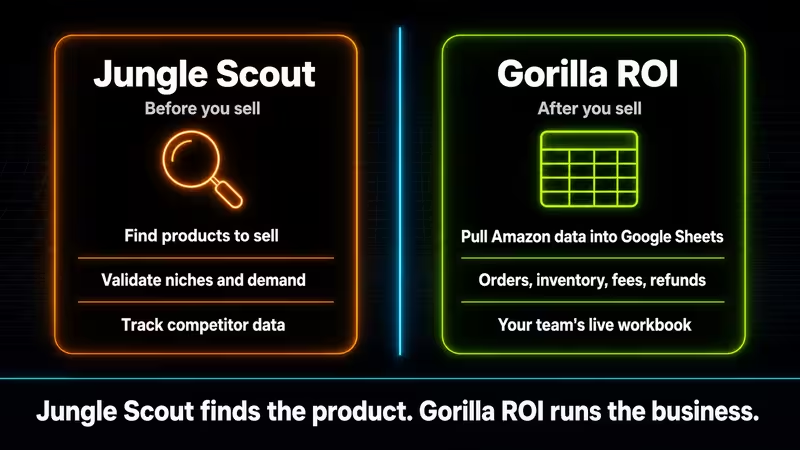
They solve different problems at different stages of the same business. Jungle Scout helps when you are still researching what to sell. Gorilla ROI helps when your business is already selling and your team needs current data in Google Sheets.
Here is the breakdown.
Jungle Scout Helps You Choose the Product
Jungle Scout is a product research and market intelligence tool. Its core job happens before you buy inventory: find product ideas, validate demand, check competition, study keywords, and decide whether a niche is worth more work.
Jungle Scout’s Opportunity Finder documentation says the tool helps sellers find high-demand and low-competition keywords, and it uses the top 1 million Amazon user searches each month to help evaluate niches. You can read that directly in .
That is useful research data.
You are looking at:
- Estimated sales
- Estimated revenue
- Keyword demand
- Review counts
- Product trends
- Competition
- Supplier options
- Listing quality
- Niche direction
Jungle Scout also lets users customize Product Tracker columns and download CSV exports, according to its Product Tracker column documentation.
So yes, Jungle Scout can help you organize research.
But I would still treat every Amazon product research and seller tools as directional. It is not a green light to wire money to a supplier.
Amazon also has its own Product Opportunity Explorer, which Amazon describes as a tool for analyzing trends in searches, purchases, reviews, and pricing when deciding what products to sell. If you have access to Amazon Brand Analytics, that can also help you compare market demand from Amazon’s side of the fence.
My take: use Jungle Scout to find ideas, then verify with Amazon-native data, supplier quotes, landed cost, review moat, ad cost, and margin after fees.
If one niche score makes you feel too confident, slow down.
Gorilla ROI Helps You Run the Business After Sales Start
Gorilla ROI is a Google Sheets data hub for ecommerce operations. It pulls your Amazon, Shopify, and Walmart data into Google Sheets so your team stops downloading CSVs.
This is a different job.
Once the product is live, the question changes from “What should I sell?” to “What is happening in my business right now?”
You need to know:
- What sold yesterday
- Which SKUs are running low
- Which products had refunds
- Which fees hit the account
- Which ad campaigns spent money
- Which channel is draining inventory
- Whether the report your team opened is current
Amazon’s SP-API Reports API documentation says sellers can use reports to monitor inventory, track orders, get tax information, track returns, and manage selling activity. That is the operating data layer. You can see it in Amazon’s SP-API Reports API documentation.
That is where Amazon seller data into Google Sheets becomes the real workflow.
Gorilla ROI pulls that data into your sheet so your team can build and maintain:
- Daily sales tracker
- FBA inventory view
- Refund review
- Fee and settlement check
- SKU-level margin sheet
- Multi-channel workbook
- Amazon, Shopify, and Walmart source tabs
Jungle Scout helps you study the market outside your account. Gorilla ROI helps you work with the data inside your account.
Same with driving. A map helps you pick the route. The dashboard tells you speed, fuel, and whether the engine is overheating.
You need the right one at the right moment.
The Difference Is Market Data vs Your Own Account Data
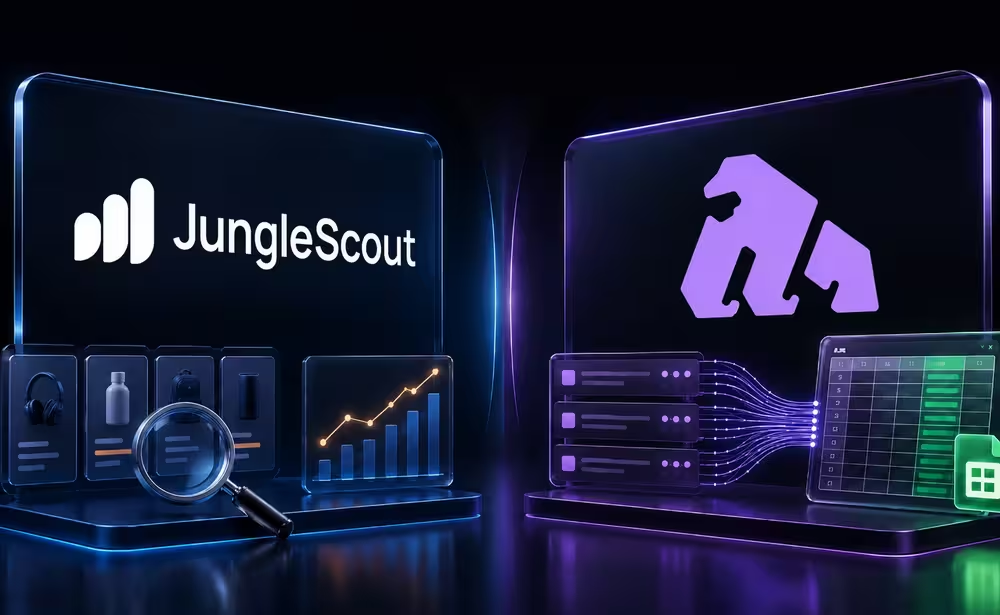
The cleanest way to compare Jungle Scout and Gorilla ROI is to ask whose data you need.
This is why I would not call Gorilla ROI a Jungle Scout replacement.
Gorilla ROI replaces manual CSV work and stale spreadsheet workflows. It does not replace product research.
And I would not call Jungle Scout a Gorilla ROI replacement. It may help you find or evaluate a product, but it does not become the live workbook your team checks every morning.
The Questions Change After Launch
The product research stage ends when your money is on the hook.
After that, your questions change fast:
- Did this SKU sell yesterday?
- Did inventory drop faster than expected?
- Did refunds increase after the new batch arrived?
- Did ad spend rise while contribution margin fell?
- Did the sheet update before the team made the reorder call?
Those questions depend on your actual account data.
Here is the workbook structure I would want before trusting a weekly meeting number:
If the main pain is inventory, start with Amazon inventory data into Google Sheets.
If the main pain is revenue visibility, start with an Amazon sales tracker in Google Sheets.
Do not build the perfect workbook first. Build the view that stops the next bad decision.
When Jungle Scout Wins
Use Jungle Scout if you are still choosing products, validating niches, or planning launches.
It fits when you need to:
- Search product ideas
- Compare niches
- Estimate category demand
- Review keyword opportunities
- Track competitor products
- Build a sourcing shortlist
Jungle Scout is also the better fit when your questions sound like this:
- “What should I sell?”
- “Is this niche too crowded?”
- “How many reviews do the top products have?”
- “What price point can this category support?”
- “Which keywords should I investigate?”
That is a real job. I would not use Gorilla ROI for it.
If you launch new products every quarter, Jungle Scout can stay useful even after your business is running. You are still doing research. You are just doing it alongside operations.
When Gorilla ROI Wins
Use Gorilla ROI if you already sell and your team runs decisions from Google Sheets.
It fits when your questions sound like this:
- “Did the report update?”
- “Which SKUs are close to stockout?”
- “Which products had refunds this week?”
- “Why does Amazon sales not match the sheet?”
- “Can I see Amazon, Shopify, and Walmart in one workbook?”
- “Can my manager update the report without logging into Seller Central?”
Gorilla ROI is downstream only by design. It pulls data into Google Sheets. It does not write changes back into your Amazon account.
That matters. A read-only flow is safer for teams because the sheet becomes a place to review and work with data, not a place where someone can accidentally push a bad change back into the selling account.
Gorilla ROI is point-and-click by default. The optional formula layer is there for advanced users who want more control, but the main job is simple: get structured ecommerce data into the spreadsheet your team already uses.
Run This Test Before You Subscribe to Either
If your Amazon channel is under $10K per month, you have one or two SKUs, and one person owns the reports, a weekly CSV export may be enough.
The manual process is not broken at that volume.
Come back when data retrieval becomes the bottleneck.
Gorilla ROI is also the wrong choice if your team does not work from Google Sheets. Clean data in a sheet nobody opens changes nothing. If you want a finished profit screen with no spreadsheet work, choose a standalone dashboard tool instead.
And if you are choosing your first Amazon tool, start with Jungle Scout or Amazon Product Opportunity Explorer. You need a product before you need operating infrastructure.
My Recommendation
Use Jungle Scout before you buy inventory. Use Gorilla ROI after the business has data worth running.
If you are still picking your first product, Jungle Scout is the better fit. Pair it with Amazon Product Opportunity Explorer, Search Query Performance where available, supplier quotes, landed cost math, ad cost reality, and margin after fees before sending money to a supplier.
If you already sell and your team lives in Google Sheets, Gorilla ROI is the better fit. At that stage, the bottleneck is no longer product discovery. The bottleneck is getting current Amazon, Shopify, and Walmart data into the workbook before someone makes a decision on stale numbers.
The mistake is buying a tool for the stage you want to be in instead of the stage you are actually in.
I have made that mistake with software, agencies, and inventory decisions.
It gets expensive fast.
Which One Do You Need Today?
Ask yourself which problem you are solving right now.
- Still hunting for your first or next product: Jungle Scout.
- Product is live and the team is pulling CSVs: Gorilla ROI.
- Running Amazon plus Shopify or Walmart: Gorilla ROI.
- Launching 3 or more new products per year: keep Jungle Scout.
- Spending 2 or more hours per week rebuilding reports: test Gorilla ROI.
- Need market estimates, competitor tracking, or niche discovery: Jungle Scout.
- Need orders, refunds, fees, inventory, and sales inside Sheets: Gorilla ROI.
And if you are still comparing feature lists, stop for a second.
Ask what decision you are trying to make tomorrow morning. The right tool becomes clearer when the decision is specific.
Common Questions
Is Gorilla ROI better than Jungle Scout?
Gorilla ROI is better if you already sell on Amazon, Shopify, or Walmart and need store data inside Google Sheets. Jungle Scout is better if you are researching product ideas, tracking competitors, or validating niches before sourcing.
Is Jungle Scout better for beginners?
Yes. Jungle Scout fits beginners better because beginners are still choosing products, checking demand, and comparing competition. Gorilla ROI fits better after you have sales, inventory, refunds, and team reporting work to manage.
Can Jungle Scout replace Gorilla ROI?
Jungle Scout does not replace Gorilla ROI when your main need is pulling your own Amazon, Shopify, or Walmart data into Google Sheets. Jungle Scout focuses on product research and Amazon market intelligence. Gorilla ROI focuses on structured store data inside spreadsheets.
Can Gorilla ROI replace Jungle Scout?
Gorilla ROI does not replace Jungle Scout for product research. It will not choose niches, estimate competitor sales for product discovery, or score product opportunities. It helps after you already have store data worth pulling into Sheets.
Should I use both Jungle Scout and Gorilla ROI?
Use both only if you have both jobs. Use Jungle Scout for product research and competitive checks. Use Gorilla ROI when the product is already selling and your team needs updated ecommerce data in Google Sheets.
What is the biggest mistake in comparing Gorilla ROI and Jungle Scout?
The biggest mistake is treating market research data and operating data as the same thing. Jungle Scout helps you study markets. Gorilla ROI helps you work with your own business data.