.svg "Gorilla ROI")

Amazon Tutorials
FBA Product Reviews: Amazon Guidelines for Safe Review Growth
Article Summary
🟤 An FBA product gains higher visibility and order volume, making its review patterns easier for Amazon to analyze.
🟤 Most FBA products generate reviews from roughly 1–4% of buyers, and large deviations from this pattern can attract scrutiny.
🟤 Stable review growth usually comes from product quality, strong customer support, and neutral review requests, not aggressive campaigns.
What Is an FBA Product?
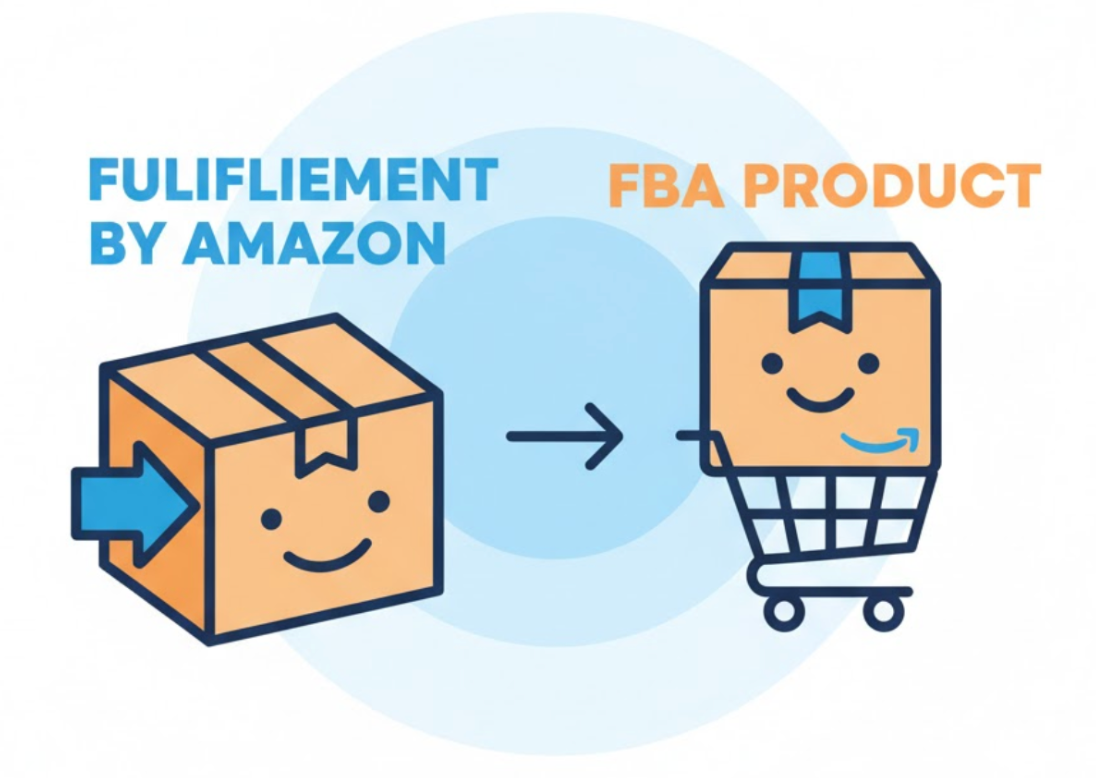
An FBA product is a listing fulfilled through Fulfillment by Amazon. Under this model, Amazon stores the seller’s inventory in its warehouses and handles:
- picking and packing orders
- shipping products to customers
- processing returns
- providing much of the customer service
Because Amazon manages fulfillment, FBA products often gain advantages such as:
- Prime eligibility
- faster delivery speeds
- stronger Buy Box competitiveness
- increased visibility in search results
These advantages often lead to higher order volume, which in turn produces more customer reviews.
However, higher review volume also makes it easier for Amazon’s systems to detect unusual review patterns.
Why Reviews Matter So Much for an FBA Product
If you look at competitive Amazon search results, the top listings typically share several characteristics:
- strong star ratings
- large review counts
- consistent review activity over time
Because FBA products frequently sell at higher volumes than merchant-fulfilled listings, they tend to accumulate reviews faster.
Even small rating changes can affect performance. A drop from 4.5 stars to 4.1 stars, for example, can noticeably reduce conversion on competitive keywords.
How Star Ratings Typically Affect Conversion
Small rating shifts can influence click-through rate, conversion, and advertising efficiency.
Amazon Product Review Guidelines in Plain Language
Amazon’s review policies prohibit attempts to manipulate or bias customer feedback.
What sellers are allowed to do
Sellers may:
- request reviews using neutral language
- use Amazon’s Request a Review feature
- include product instructions or support information in packaging
- offer legitimate customer support
- report reviews that violate Amazon policies
Customers remain free to leave positive or negative reviews.
What is prohibited
Incentivized reviews
Sellers cannot offer anything of value in exchange for a review.
Examples include:
- refunds
- gift cards
- discounts
- free products
Review gating
Review gating occurs when only satisfied customers are asked to leave reviews.
Example:
“If you love the product, please leave a review. If not, contact support.”
Sentiment steering
Messages cannot encourage a specific rating.
Examples include:
- “Please leave a 5-star review.”
- “Help our small business with a positive review.”
Off-platform review campaigns
Programs promising refunds or rewards after posting reviews violate Amazon policy.
Examples include:
- rebate clubs
- “refund after review” promotions
- influencer campaigns requiring Amazon reviews
FBA Product vs FBM Product Review Behavior
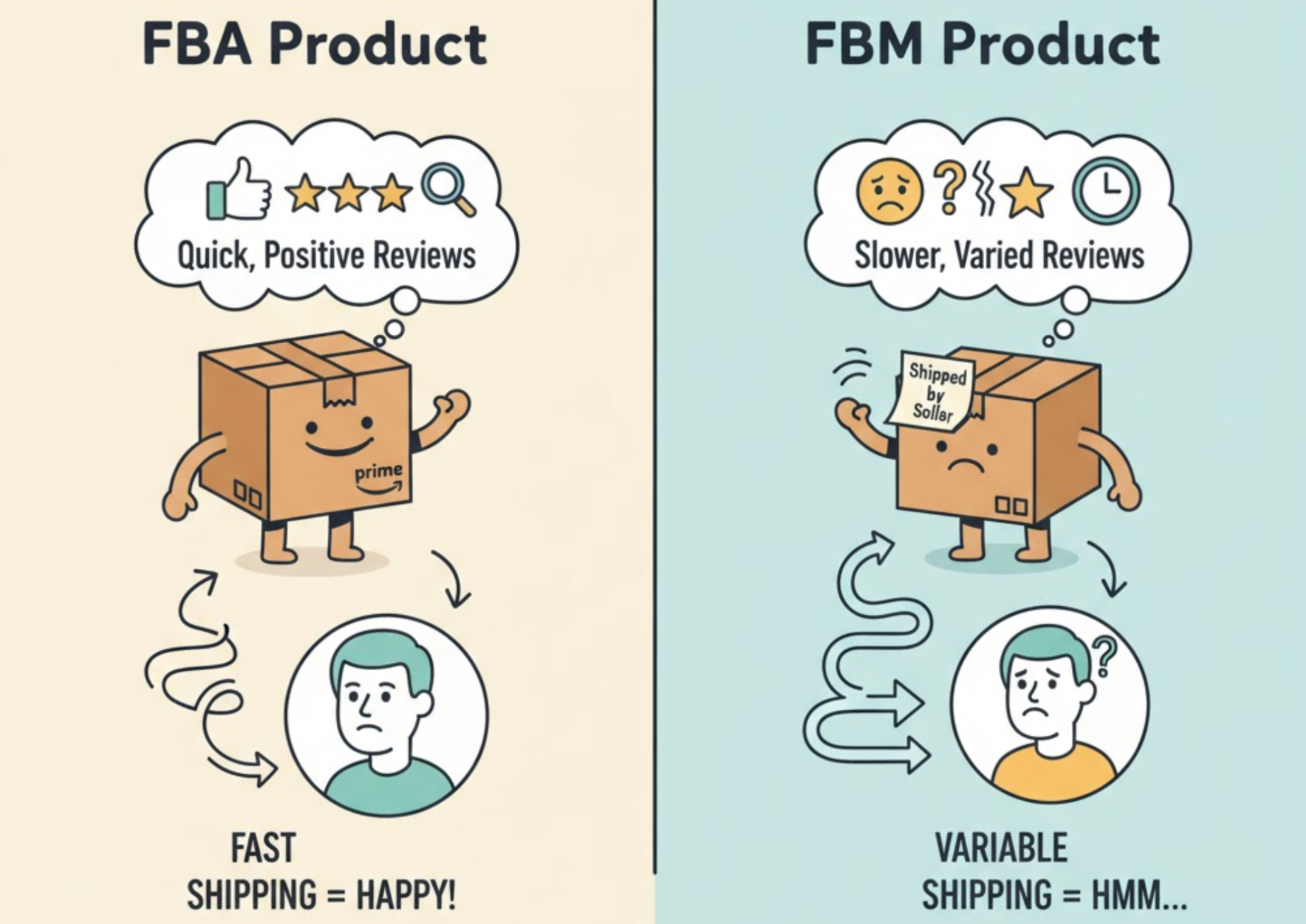
Because FBA products usually generate more sales, their review activity becomes easier for Amazon to analyze.
How Amazon Detects Suspicious Review Patterns
Amazon rarely takes action based on a single message or insert.
Instead, enforcement usually follows behavior patterns over time.
Signals Amazon Uses to Evaluate Reviews
When several of these signals appear together, listings are more likely to be investigated.
Review Velocity Patterns: What Usually Triggers Scrutiny
Most Amazon listings generate reviews from roughly 1–5% of buyers.
A product selling 100 units per week, for example, might normally receive 1–5 reviews during that time.
Sustained review spikes outside these ranges can attract additional scrutiny.
Marketplace Observations: Typical Review Growth for an FBA Product
Across many Amazon categories, review growth tends to scale gradually with order volume.
Typical Review Behavior on Established Listings
Listings that consistently generate review rates far above these levels may appear unusual to Amazon’s systems.
The FBA Product Review Lifecycle
Understanding this lifecycle helps sellers recognize whether their review growth looks natural.
Case Example: Stabilizing Review Growth
A consumer electronics brand selling through FBA launched an aggressive insert campaign encouraging reviews.
Within three weeks the listing accumulated over 80 reviews, despite averaging only 20–25 daily orders.
Conversion initially improved.
Several months later Amazon removed a large portion of those reviews during a review integrity sweep. The listing lost more than 40% of its review count, and the rating decline reduced conversion on several key keywords.
After removing the insert campaign and shifting to a support-first post-purchase journey, review growth stabilized at around 2–3% of buyers, aligning more closely with typical marketplace patterns.
Designing Review-Safe Post-Purchase Journeys
A post-purchase journey includes interactions from order placement to roughly 60–90 days after delivery.
Example of a Review-Safe Post-Purchase Journey
When customers successfully use the product, reviews tend to follow naturally.
Why Amazon Reviews Sometimes Disappear
Amazon periodically removes reviews when its systems detect policy violations or suspicious patterns.
Common Reasons Amazon Removes Reviews
Because removals often occur long after the original activity, sellers sometimes struggle to identify the cause.
Managing Negative Reviews Without Violating Policy
Negative reviews are unavoidable.
Instead of trying to remove them, experienced sellers treat them as feedback.
Respond professionally.
Solution-focused responses show buyers the brand is attentive.
Resolve legitimate problems.
Offer troubleshooting or replacements when appropriate.
Request removal only when appropriate.
Amazon may remove reviews that include:
- personal information
- hate speech
- irrelevant commentary
Honest negative feedback usually remains.
Final Takeaway
An FBA product often receives more visibility and sales than many other listings, which means its review patterns are easier for Amazon to evaluate.
Listings that accumulate reviews steadily and organically tend to perform better in the long run than listings relying on aggressive review campaigns.
Sellers who focus on product quality, customer success, and neutral feedback requests usually build stronger and more durable review profiles.
Leave a Reply










Manual Exports Don’t Scale Forever
Replace Manual Spreadsheet Workflows Before They Slow Your Team Down